
How to Know You’re Ready for Your First Decompression Course
For many divers, the move into decompression training feels like the real beginning of technical diving.
It is the point where diving becomes less about simply reaching a certain depth and more about planning, control, discipline, and consequence. That shift is exactly why decompression training appeals to serious divers. It opens the door to longer bottom times, more ambitious profiles, and a level of diving that demands a higher standard of performance.
But there is an important difference between wanting to start decompression diving and actually being ready for your first decompression course.
Those are not the same thing.
A good technical instructor is not looking only for enthusiasm. They are looking for a diver who already shows the control, awareness, and attitude needed to build technical skills safely. Meeting the minimum prerequisites for a course may make you eligible to enroll, but eligibility alone does not mean you are prepared to perform well in training.
So how do you know whether you are genuinely ready?
Being qualified is not the same as being prepared
Most first-level decompression courses are designed as the transition from advanced recreational diving into structured technical diving.
That matters because many divers judge readiness only by checkboxes:
- I have the minimum certification
- I have the required number of logged dives
- I have been deep enough
- I use nitrox regularly
Those things matter, but they do not tell the whole story.
A diver can meet the minimum requirements and still struggle badly in a first decompression course. Another diver may have fewer “impressive” dives on paper but arrive with excellent buoyancy, strong situational awareness, calm problem-solving, and a much better chance of success.
Real readiness comes down to whether your current diving habits support the demands of technical training.
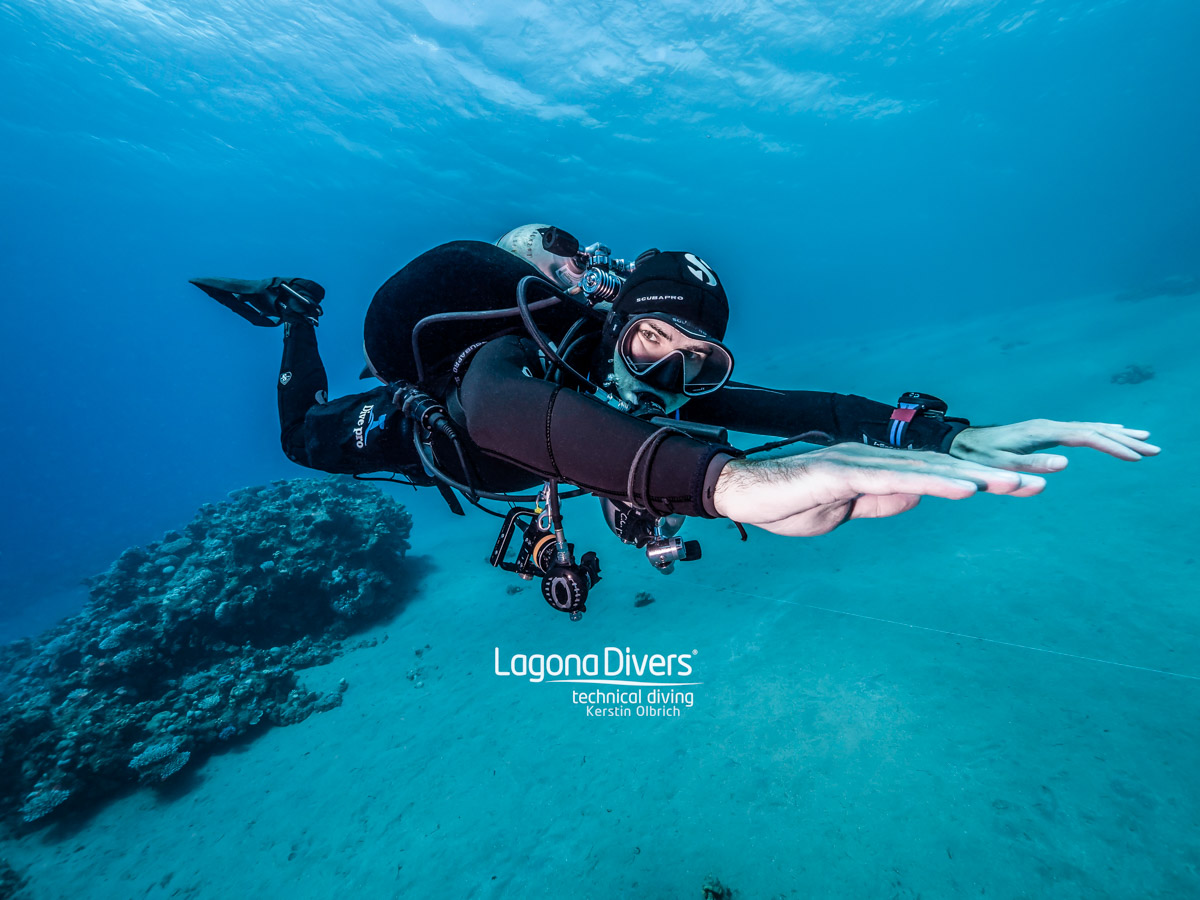
You are probably ready if your buoyancy and trim are already consistent
The clearest sign that a diver is approaching decompression-course readiness is not depth experience.
It is control.
If you still need to think hard about holding depth, if your trim changes every time your task load increases, or if your finning becomes unstable when something unexpected happens, then a decompression course will feel overwhelming very quickly.
In technical training, buoyancy and trim are not optional extras. They are the platform on which everything else is built:
- gas switches
- stage handling
- ascent control
- stop discipline
- team awareness
- emergency response
A diver who cannot hold a stable stop in open water without constant adjustment is not ready to add cylinders, more complex planning, and decompression obligations.
A useful self-check is simple: can you hold depth accurately at the end of a dive while remaining calm, stable, and aware of your teammate and equipment? If the answer is not consistently yes, that is usually the first area to improve before starting a course.
You are ready when basic skills feel automatic, not effortful
A decompression course is not the place to still be figuring out your baseline diving.
You should not be using technical training to become comfortable with basic trim, SMB deployment, gas checks, or stop control. The course should build on fundamentals, not rescue them.
Your core in-water skills should already be reliable under normal diving conditions. You should be able to:
Maintain stable depth without chasing it
This sounds simple, but it becomes much harder under task loading. A decompression student should already be comfortable hovering precisely, ascending slowly, and stopping without large corrections.
Move efficiently in the water
Good propulsion matters more than many divers realize. Efficient frog kick, controlled positioning, and the ability to avoid silting or destabilizing yourself become increasingly important as dives become more structured and equipment-heavy.
Stay calm while solving small problems
Technical instructors notice very quickly whether a diver reacts or responds. If a spool tangles, a mask floods, or a small equipment issue appears, do you become rushed and narrow-focused, or do you stay composed and methodical?
That difference matters far more than confidence on the surface.
You are ready when you respect procedures instead of resisting them
Many divers are drawn to technical diving because it looks adventurous.
The better reason to enter technical diving is that you value disciplined diving.
A decompression course introduces a different mindset. It requires you to follow procedures because the margin for improvisation is smaller. You need to be willing to brief properly, plan properly, check properly, and dive the plan with intent.
If you dislike checklists, rush equipment setup, skip buddy verification, or treat pre-dive planning as a formality, you are not ready yet.
The students who progress best are usually not the most naturally talented. They are the ones who are coachable, systematic, and willing to slow down enough to do things correctly.
Experience matters, but the type of experience matters more
A diver may say, “I have 100 dives,” but that number alone says very little.
What matters is whether those dives built the right habits.
The experience that usually helps before a first decompression course includes:
- regular diving rather than long periods of inactivity
- dives in conditions that require control, not just easy sightseeing
- comfort with deeper profiles within your current training limits
- meaningful use of nitrox and gas awareness
- experience diving as part of a team rather than drifting through dives independently
By contrast, a high logbook number built mostly on easy holiday dives does not necessarily prepare a diver for decompression training.
You do not need to be an expert before the course. But you should already be a competent, deliberate diver with a track record of consistency.
You are ready if you can manage task loading without losing awareness
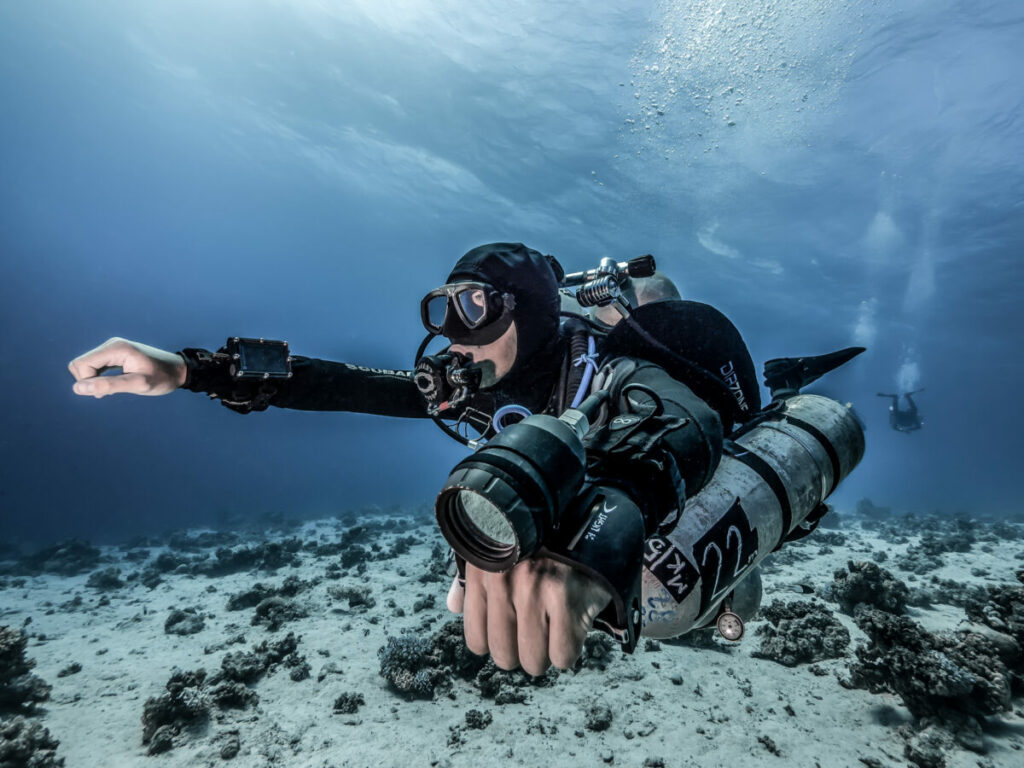
One of the biggest jumps in a first decompression course is cognitive, not physical.
Suddenly you are not just diving. You are tracking depth, time, gas, team position, ascent strategy, stop discipline, and equipment status together.
That means readiness often comes down to one question:
When you have more to think about, do you stay organized or do you unravel?
A good candidate for decompression training can absorb information without immediately sacrificing depth control or awareness. They may not be perfect, but they remain functional and coachable as complexity increases.
If task loading already causes your buoyancy to collapse, your breathing to spike, or your awareness to narrow dramatically, the best next step may be skills refinement rather than immediate course entry.
Equipment familiarity is part of readiness
You do not need to arrive as a finished technical diver, but you should not arrive as someone who is still fighting their equipment.
If your current setup is unstable, poorly fitted, unfamiliar, or inconsistent from dive to dive, your learning bandwidth gets wasted on avoidable problems.
Before starting a decompression course, you should ideally be comfortable with:
- a well-configured exposure suit and weighting system
- stable trim in your actual kit
- disciplined gas monitoring
- clean hose routing and uncluttered equipment
- basic accessories such as spool, DSMB, and backup tools relevant to your training path
This does not mean you need to own every piece of advanced kit before training. It means you should already understand the value of streamlined, repeatable configuration and be willing to refine it properly.
Mindset is often the deciding factor
Some divers are technically capable but still not ready.
Why?
Because they are entering the course for the wrong reason.
If your main motivation is ego, status, speed, or the idea that technical diving makes you a “better” diver, you are more likely to resist correction and underestimate the discipline involved.
The divers who usually do well are motivated by something different:
- they want structured progression
- they accept that fundamentals matter
- they are comfortable being corrected
- they understand that technical diving rewards discipline, not shortcuts
A first decompression course should not be approached as a badge. It should be approached as the beginning of a more serious type of diving.
Signs you may need more preparation first
Not being ready yet is not a failure.
In fact, recognizing that you need more preparation is usually a sign of maturity.
You may benefit from more foundational work before starting a decompression course if:
Your buoyancy is inconsistent at stops
If you regularly drift up and down during safety stops, technical ascent control will be much harder than it needs to be.
You become overloaded easily
If basic tasks already cause stress or loss of awareness, adding stage procedures and decompression obligations is likely premature.
Your diving is infrequent
If there are long gaps between dives, your baseline skills may not be stable enough to support technical training efficiently.
You are still solving basic gear problems
A course should not be spent troubleshooting poor equipment fit, major weighting errors, or fundamental setup confusion.
You want the certification more than the training
That is one of the clearest warning signs. Technical training works best when the student values competence over credentials.
What to do before enrolling
If you are close, but not quite there, the solution is usually straightforward.
Spend time improving the foundation that the course will rely on.
Get honest feedback from a technical instructor
A short evaluation dive or honest discussion with the right instructor can tell you more than your own self-assessment.
Polish your core in-water skills
Work on trim, buoyancy, propulsion, DSMB deployment, and stop control until they feel normal, not exceptional.
Dive with intention
Instead of just collecting more dives, use your dives to sharpen specific skills. Deliberate practice is far more valuable than building numbers without purpose.
Make your equipment more consistent
A stable, streamlined setup removes noise from the learning process.
Choose the right training environment
The right course is not just about agency. It is about instructor quality, standards, pacing, and whether the training environment supports serious development.
A good technical diving center does not simply accept anyone who can pay for the course. It helps divers enter training at the right point, with the right preparation, so they can actually build lasting competence.
If you are considering the move into technical diving, explore our technical diving training programs to see the progression options available for serious divers.
The best indicator: you are ready to train, not ready to prove something
The best students usually arrive with a specific kind of attitude.
They are confident enough to start, but humble enough to learn.
They are not expecting the course to be easy. They are expecting it to be structured, demanding, and valuable.
They understand that a decompression course is not there to validate them. It is there to expose weak points, improve control, and build a safer path into more advanced diving.
If that sounds like where you are mentally and practically, you are probably much closer than you think.
Final thoughts
Your first decompression course should feel like a natural next step, not a gamble.
If your control is solid, your basic skills are dependable, your mindset is disciplined, and your motivation is rooted in progression rather than ego, you are likely ready to begin. If not, the right answer is not to force it. The right answer is to prepare properly and start when the foundation is strong enough to support real learning.
That approach does not slow your progress down.
It protects it.
Thinking about your first decompression course? Contact Lagona Divers Technical to discuss your current experience, your goals, and the best next step into structured technical training.
FAQ
Do I need to be a highly experienced diver before starting a decompression course?
Not necessarily. You do not need to arrive as an advanced technical diver, but you do need reliable core skills, a calm mindset, and enough recent experience to handle increased task loading safely.
Is meeting course prerequisites enough to know I am ready?
No. Minimum prerequisites may make you eligible to enroll, but true readiness depends on buoyancy, trim, awareness, equipment control, and mindset.
Should I do a fundamentals or evaluation dive first?
For many divers, yes. A skills-focused session before the course can reveal whether you are ready now or whether a short period of refinement would make your decompression training more productive.
What is the biggest mistake divers make before their first decompression course?
One of the biggest mistakes is entering the course too early and hoping the course will fix weak foundational skills. Good technical training builds on control; it does not replace the need for it.
What should I improve first if I am not ready yet?
Start with buoyancy, trim, propulsion, ascent control, and general task loading. Then look at equipment consistency and your ability to stay calm while solving minor problems underwater.